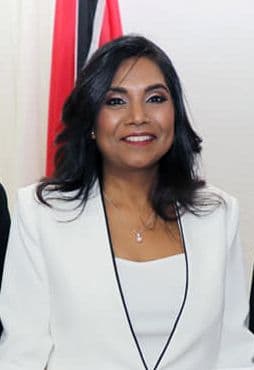
Auditor General Jaiwantie Ramdass published her 2024 report on the public accounts of Trinidad and Tobago. For the second consecutive year, she issued a disclaimer of opinion - the most severe assessment an auditor can deliver. It means the Auditor General was unable to obtain "sufficient appropriate audit evidence" to form an opinion on whether the public accounts are accurate. The government's own books are, in the Auditor General's professional judgment, unverifiable.
The report documented a net increase of $7.62 billion - 7.43% - in public debt, bringing the total to $110.14 billion. It found four outstanding government loans amounting to over $1.75 billion that were missing from the national public debt figure entirely. Treasury notes worth $2.08 billion were left out of the Statement of Off-Balance Sheet Financing, understating the figure from $2.73 billion to just $650 million. A discrepancy of $2.6 billion in asset accounts lacked explanatory notes. The opening balance for state-guaranteed loans was quietly restated from $19.25 billion to $28.15 billion - a nearly $9 billion increase that was neither explained nor documented.
No major media outlet conducted a full analysis of the report. Prime Minister Persad-Bissessar acknowledged that "the Auditor General could not verify, validate or approve the accounts of the Government for two years." The findings entered the public record and effectively disappeared.
What the Numbers Mean
A disclaimer of opinion is not a qualified opinion or an adverse finding on specific items. It is a statement that the accounts as a whole cannot be relied upon. When the Auditor General says she cannot form an opinion on the public accounts, she is saying the financial records of the Government of Trinidad and Tobago do not meet the evidentiary standard required for independent verification. Two consecutive disclaimers means the problem is not a one-year anomaly. It is systemic.
The $1.75 billion in missing loans is not a rounding error. These are government borrowings that do not appear in the public debt figure reported to Parliament and the public. If the debt figure the government reports excludes $1.75 billion in actual obligations, every fiscal ratio derived from that figure - debt-to-GDP, debt service coverage, borrowing capacity - is wrong. The $2.08 billion in off-balance-sheet items compounds the problem. The government's reported financial position understates its actual exposure by billions.
The $9 billion restatement of state-guaranteed loans - from $19.25 billion to $28.15 billion - without explanation or disclosure is perhaps the most significant finding. State-guaranteed loans represent contingent liabilities that become real obligations if the guaranteed entities default. A quiet $9 billion increase in that exposure, undocumented in the public accounts, means Parliament was not informed of a material change in the country's fiscal risk profile.
The Ministry That Blocked the Audit
The Ministry of Education failed to allow auditors access to its financial records. The result: no audit was performed on the ministry's major financial statements, which included more than $6.1 billion in expenditure and nearly $32 million in revenue. A ministry spending over $6 billion of public money per year was not audited because it did not cooperate with the auditor.
This is not a technical dispute about accounting standards. It is a government ministry refusing to let the constitutionally mandated independent auditor examine how it spent public funds. The Auditor General documented the obstruction. No public consequence followed.
The Rent, the Contracts, and the Missing Certificates
Beyond the headline fiscal figures, the report documented granular governance failures. Discrepancies exceeding $10 million were found in rent paid by ministries - suggesting different departments pay different amounts for comparable space, or pay for space they do not occupy, or pay amounts that do not match their lease agreements. Contract registers were not properly maintained across multiple agencies. Payments of $2.74 million were made for projects without completion certificates - meaning the government paid contractors for work that was never verified as complete. ICT centre items were recorded without property tags, making them untraceable.
Each of these findings, individually, represents either systemic governance failure or specific misuse of public funds. Collectively, they describe a government whose financial record-keeping is not adequate for basic accountability.
The State Enterprises
The accountability gap extends beyond central government. The Auditor General's examination of state enterprises has revealed similar patterns. The PTSC received an adverse opinion after $850 million in accumulated deficit and government grants could not be properly verified. Caribbean Airlines has not produced audited financial statements since 2016. The Public Accounts (Enterprises) Committee - the parliamentary body tasked with examining state enterprise accounts - has been handicapped by the late or non-submission of annual reports and financial information.
The pattern is consistent: state-owned entities receive billions in public funds, produce financial statements late or not at all, and face no consequences for non-compliance. The Auditor General documents the failures. The parliamentary committees that are supposed to act on them are unable to function because the information they need is not provided.
What Should Happen Next
The standard process following an Auditor General's report is for the Public Accounts Committee to examine the findings, call relevant officials to testify, make recommendations, and verify compliance in the following year. Whether this has occurred for the 2024 report is not in the public record.
A Trinidad Express columnist described the state of parliamentary oversight as a "crumbled oversight function." The characterisation is supported by the evidence. The Auditor General does the work - the constitutional officer whose role is to verify that public money is spent as authorised has fulfilled that role. What happens afterward is where the system fails.
The institutional machinery that should act on these findings is itself broken. The Integrity Commission has zero prosecutions in 37 years since its inception in 1987. Its staff has been reduced from 63 to 26. Over 3,000 declarations from public officials remain outstanding. The Director of Public Prosecutions lacks an independent budget - "beholden to the AG," as critics have put it. These weaknesses explain why Auditor General reports go unactioned year after year. The reports are produced. The institutions that should enforce their findings lack the resources and independence to do so.
Each finding in the report should be traced to a specific ministry or agency. The responsible officers should explain the discrepancy. Corrective action should be mandated. Compliance should be verified. If any of this has happened, it has not been reported. If none of it has happened, the report is not oversight. It is documentation of a problem that nobody intends to fix.
The Auditor General found $1.75 billion in missing loans, $2.08 billion in unreported off-balance-sheet items, a $9 billion unexplained restatement, a ministry that blocked auditors from $6.1 billion in expenditure, and a public debt figure that cannot be independently verified. She published her findings. The question is not whether anyone will read the report. It is whether anyone will act on it.
Sources
- Auditor General of Trinidad and Tobago: Report on the Public Accounts - Financial Year 2024
- Auditor General of Trinidad and Tobago: Special Report 2024
- Stabroek News: "Trinidad Auditor General issues second disclaimer on public accounts" (June 2025)
- Trinidad Express: "Fiscal mayhem" (2025)
- Trinidad Express: "Crumbled oversight function" (columnist, 2025)
- Stabroek News: "The 2024 Auditor General's Report on the audit of the public accounts" - Part II (December 2025)
- Stabroek News: "The 2024 Auditor General's Report on the audit of the public accounts" - Part IV (December 2025)
- Newsday: "Auditor General scolds PTSC: $850M not properly accounted for" (December 2024)
- Ministry of Finance: Response to Auditor General's letter (2024)
- Parliament of Trinidad and Tobago: Public Accounts Committee reports
- Budget documents: Details of Estimates of Recurrent Expenditure