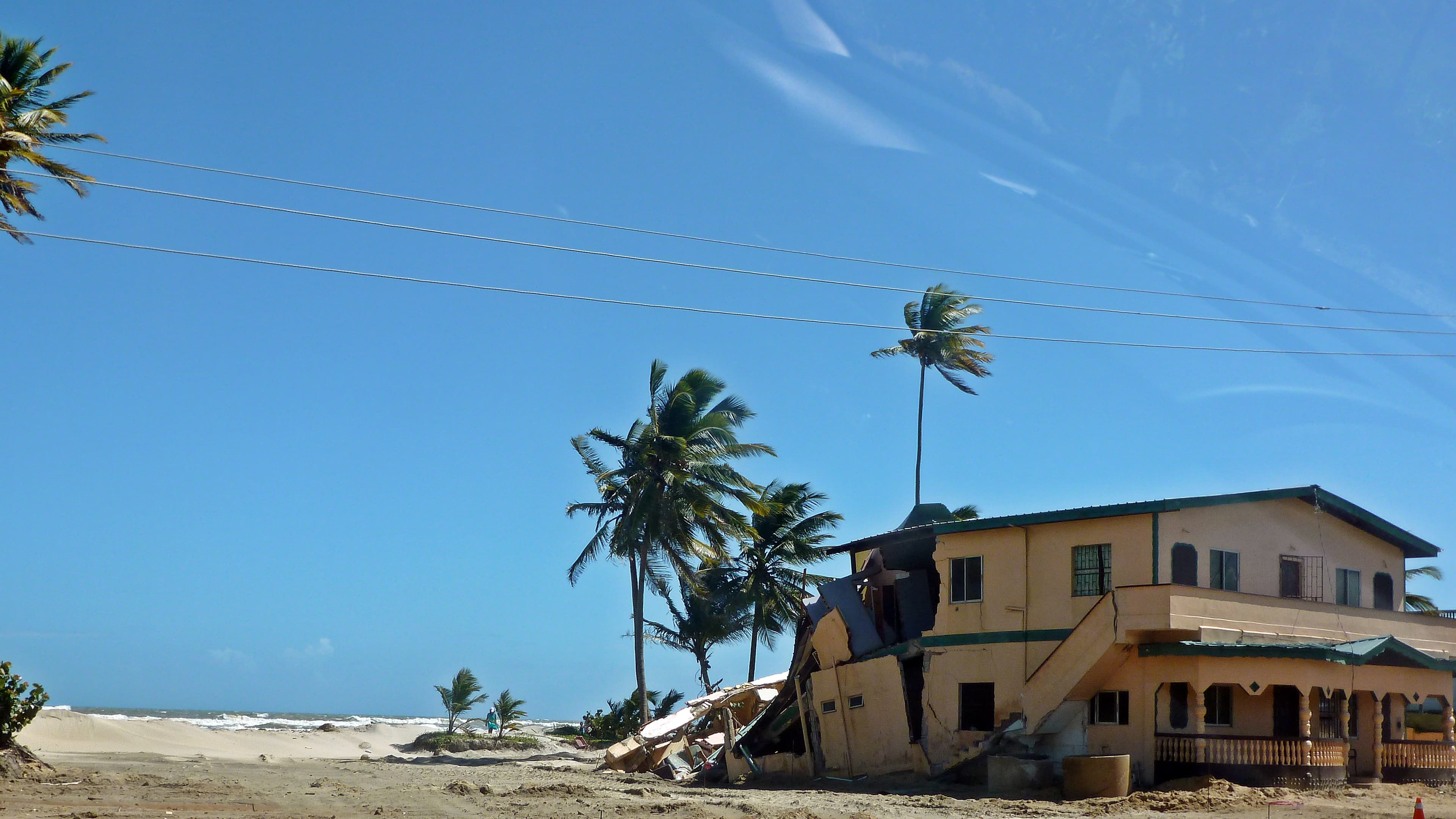
On January 22, 2026, heavy rainfall caused flash flooding in Barrackpore, Diego Martin, Cocorite, Penal/Debe, and Port of Spain. The Princes Town Regional Corporation reported flooding at Cumuto South Trace. The Diego Martin Borough Corporation reported flooding along the Western Main Road. The Port of Spain City Corporation reported flooding on Cipriani Avenue, around the Queen's Park Savannah, and along Wrightson Road. The Penal/Debe Regional Corporation reported flooding along Clarke Road near Shiva Boys' Hindu College, SS Erin Road, Lachoos Road, and the Lowkie Trace junction.
Rural Development and Local Government Minister Khadija Ameen said on January 23 that there was "no major impact" because the waters subsided quickly. For the residents whose furniture was soaked and whose cars stalled in floodwater, the speed of subsidence does not erase the fact of inundation. The water enters, damages, leaves, and returns the next time it rains hard enough - which, in Trinidad and Tobago, is not a question of if but when.
Every community affected on January 22 has flooded before. Most have flooded repeatedly, across administrations, across decades, across budgets that allocate money for the precise purpose of preventing what keeps happening.
The 2025 Rainy Season - A Preview of What the Money Failed to Prevent
The January 2026 event was a dry-season flash flood - brief, localized, quickly dismissed. The 2025 wet season told a more consequential story.
From June 9 to June 12, 2025, Tropical Wave 04 and a low-level trough brought sustained rainfall across northern, central, and southern Trinidad. Rainfall totals ranged from 75 to over 200 millimetres in northern areas, with some locations recording between 200 and 300 millimetres over the period. Soils saturated. Drainage systems failed. Rivers rose.
On June 11, the Trinidad and Tobago Meteorological Service upgraded the Riverine Flood Alert to Orange Level for the Caroni River Basin, indicating a high probability of overflow. The Caroni River reached 94 per cent capacity at El Carmen and exceeded capacity near Tumpuna, overspilling into surrounding communities. Residents of St Helena, Piarco, Kelly Village, Ibis Gardens, Caroni Village, Spring Village, and the Real Spring Housing Development in Valsayn South were flooded by the Caroni River itself - not street runoff, but the river leaving its banks because the infrastructure designed to contain it could not.
In the northwest, Port of Spain, Diego Martin, Westmoorings, Maraval, and St. James experienced significant street flooding. The Diego Martin River reached full capacity by the evening of June 11. In the south, Penal, Debe, Barrackpore, and Siparia were the worst hit. Floodwaters in some southern locations reached 1 to 1.5 metres inside homes - chest-high water in living rooms.
Five months later, on November 20, 2025, flash flooding hit the lowest-lying areas of the Penal/Debe municipality again, stranding dozens of motorists along SS Erin Road and surrounding traces. The Penal Debe Regional Corporation chairman acknowledged the problem and said that having received an estimated 120 per cent increase in funding for fiscal 2026, detailed mitigation works were planned for the dry season.
This is the cycle. The wet season floods communities. Officials acknowledge the problem. The budget allocates money. The dry season passes. The next wet season arrives. The same communities flood again. The question is whether the money that flows through the budget system produces any corresponding reduction in the water that flows through the drainage system - or whether both simply flow and neither accomplishes its stated purpose.
What the Budget Actually Allocates
The 2026 budget allocated $30 million for flood mitigation under the Flood Mitigation and Erosion Control Programme, $78.5 million for local drainage distributed across 14 municipal corporations, and $5 million for the Major River Clearing Programme to facilitate work on the Caroni River system.
The Flood Mitigation and Erosion Control Programme is set to execute 18 ongoing and 119 new projects worth $238.6 million total, with $29.95 million for river clearing and embankments in high-risk communities. The budget also committed $13.8 million under the Strategic Drainage Plan for studies in the South Oropouche Basin, $60 million for structural works in the Caroni and Oropouche systems, and $8 million for upgrading drainage pumps and flood gates including the Bamboo No. 1 Storm Water Pump Station.
These numbers, taken at face value, appear substantial. But context changes how they read.
The $78.5 million for local drainage, spread across 14 municipal corporations, averages roughly $5.6 million per municipality. For a city like Port of Spain - which floods routinely and operates on colonial-era drainage infrastructure built for a fraction of the rainfall that climate change now delivers - $5.6 million is maintenance money. It keeps the existing inadequate system functioning at its existing inadequate capacity. It does not transform it.
And the distribution is not even. All PNM-controlled municipal corporations received decreased allocations in the 2026 budget, while all UNC-controlled corporations received increases. Point Fortin's drainage budget fell from $5 million to $300,000. Chaguanas saw a 122.5 per cent increase. Whether flooding respects partisan boundaries is a question that nature has already answered. It does not.
The International Money
Beyond the domestic budget, two internationally funded projects are supposed to be addressing Trinidad and Tobago's structural flooding problem.
The Inter-American Development Bank approved a US$120 million loan for the Port of Spain Flood Alleviation Project. The loan terms are 25 years with a five-year grace period. The project scope includes drainage interceptors, detention ponds, pumping stations, and a 1.4-kilometre linear park in East Port of Spain. The IDB estimated economic damage from flooding in the targeted project area at US$11.6 million annually. A drainage scheme and detention pond were completed at South Quay, but the broader project's advancement status remains unclear, and Port of Spain continues to flood with regularity.
The Adaptation Fund, through the Latin American Development Bank (CAF), committed US$10 million for the South Oropouche River Basin (SORB) project, implemented in partnership with the University of the West Indies. The SORB is a critical zone - an estimated 60 per cent of the Penal/Debe municipality lies within the Oropouche watershed, which is why the area floods with such consistency. The basin historically experiences flooding from high-intensity storms roughly ten times per year, but in recent years, basin-wide floods with deep water taking days to subside have become nearly annual events. Economic losses in the SORB alone range from US$19 to US$36 million annually. The project targets nearly 200,000 beneficiaries through territorial planning, water infrastructure investment, and ecosystem-based adaptation measures.
Both projects represent real engineering and real money. The question is pace. The IDB loan was approved years ago. The SORB project launched in 2023. The communities they are meant to protect flooded in June 2025, flooded again in November 2025, and flooded again in January 2026. International development timelines and tropical rainfall do not operate on the same calendar.
The Solomon Hochoy Connection
The Solomon Hochoy Highway Extension to Point Fortin - the $7.5 billion road project - has its own flooding entanglement. The highway section at Mosquito Creek collapsed in January 2023 and was being rebuilt with a March 2026 completion target. The reconstruction includes a two-metre elevation of the northbound lane intended to end perennial flooding from high spring tides, 2.5 kilometres of revetment and sea wall construction, and the demolition and reconstruction of the Mosquito Creek Bridge.
Large infrastructure projects that cut through low-lying terrain alter natural drainage patterns. Whether the highway extension's final design accounts for the drainage needs of the communities it passes through - or whether it prioritizes traffic flow over water management - is an engineering question with real consequences for the people who live at the low points of the road.
The Larger Pattern
Approximately 40 per cent of Trinidad and Tobago's population experiences flooding annually. In severe events, as much as 80 per cent of Trinidad's land area has been affected - the October 2018 floods demonstrated this when two days of rainfall equivalent to a full month's total inundated the country, affecting an estimated 150,000 people in over 4,100 households and devastating 75 per cent of local farmers through crop and livestock losses. Annual economic losses from flooding nationally range between TT$100 million and TT$250 million.
Both parties have promised flood mitigation across multiple budgets without delivering structural solutions. The Oropouche watershed problem has persisted through PNM and UNC administrations alike - each blaming the other's neglect while repeating the same cycle of underfunded incremental works.
The pattern persists because the root cause - inadequate drainage capacity for the volume of water that tropical rainfall produces in an era of intensifying weather - has not been addressed at the scale required. The ECLAC has studied it. The IDB has funded it. The Adaptation Fund has invested in it. The Ministry of Works budgets for it every year. And yet the same communities flood, the same minister assures the public that there was no major impact, and the same budget lines reappear in October.
The missing piece is a publicly available, multi-year analysis comparing flooding frequency against cumulative drainage spending. Such an analysis would reveal whether the hundreds of millions spent over the past decade have produced any measurable reduction in how often these communities flood. Its absence is telling. Either nobody in government has conducted it - which would mean they are spending without measuring - or they have and the results are unfavourable.
The 2026 rainy season will begin around June. The same areas will flood. The budget will have allocated money. The drains will have received some clearing. And the fundamental mismatch between how much water falls on Trinidad and Tobago and how much the drainage system can handle will remain, because resolving it requires investment at a scale that no single budget cycle has yet attempted.
Sources
- Newsday: "No major damage after Jan 22 flash flooding" (January 23, 2026)
- Loop TT: "Heavy showers lead to flash flooding in West Trinidad"
- The Watchers: "Heavy rainfall triggers widespread flooding and infrastructure damage across Trinidad" (June 12, 2025)
- TT Weather Center: "Caroni River Hits Critical Threshold - Riverine Flood Alert Upgraded to Orange" (June 11, 2025)
- TT Weather Center: "Riverine Flood Alert Extended and Expanded for Caroni, South Oropouche River Basins" (June 12, 2025)
- Newsday: "Flash flooding in Penal, corporation says mitigation works coming" (November 20, 2025)
- IDB: "Trinidad and Tobago to alleviate flooding in Port of Spain with IDB loan"
- Ministry of Works and Transport: Port of Spain Flood Alleviation Project page
- Adaptation Fund: "Multi-Pronged Adaptation Approach Brings Flood Relief to Trinidad's Vulnerable South Oropouche River Basin"
- CAF: "USD 10 million project for flood relief in Trinidad and Tobago" (October 2023)
- Newsday: "US$10m fund launch to build resilience in South Oropouche River Basin" (September 16, 2023)
- T&T Parliament: Ministry of Works and Infrastructure Budget Guide 2026
- Ministry of Finance: Budget Statement 2026
- Trinidad Express: "March 2026 deadline for Mosquito Creek work"
- Trinidad Guardian: Budget analysis - municipal corporation funding disparities (October 2025)
- Cari-Bois: "From historic floods to water shortages - a look at Trinidad and Tobago's changing climate" (April 2025)
- ECLAC: "An economic analysis of flooding in the Caribbean - The case of Jamaica and Trinidad and Tobago"
- ReliefWeb: "Trinidad and Tobago - Floods October 2018"
- World Bank Climate Change Knowledge Portal: Trinidad and Tobago - Historical Natural Disasters
- Trinidad and Tobago National Adaptation Plan (2024)