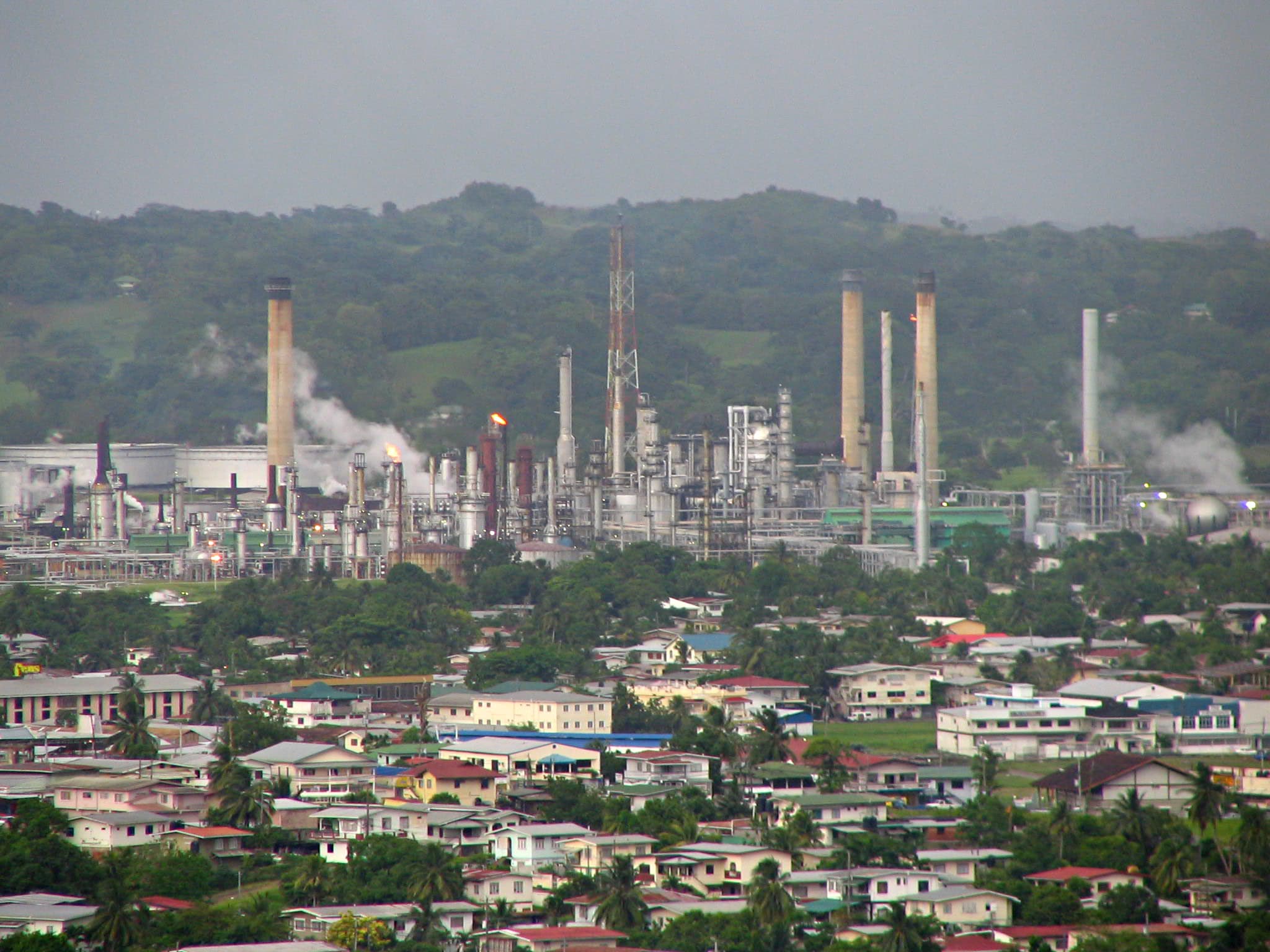
The Dragon gas project has been discussed for over forty years. The cross-border field, straddling the maritime boundary between Trinidad and Tobago and Venezuela, holds an estimated 4.2 trillion cubic feet of proven natural gas reserves. Together with the broader Loran-Manatee structure, the resource base stretches to roughly 10 trillion cubic feet.
It has never been developed. The barrier has always been political alignment - between Port of Spain, Caracas, Washington, and the international oil companies willing to commit billions to a project that requires all three governments to remain cooperative simultaneously.
In early January 2026, US military forces extracted Venezuelan President Nicolas Maduro from power. For a few weeks, the alignment appeared broken once again. Then it came back together - on terms that look very different from anything that came before.
The Licence That Died and Came Back
The PNM government under Stuart Young secured the original OFAC licence amendment in October 2023 after direct requests to Washington dated March and September of that year. That licence was specific to the government of Trinidad and Tobago and NGC, valid through October 2025, permitting Shell and their contractors to negotiate, explore, and develop Dragon. Young then negotiated the 30-year Venezuela exploration licence for Dragon, signed in December 2023, and followed with the Cocuina-Manakin OFAC licence in May 2024. He personally led the delegations to both Caracas and Washington. Trinidad and Tobago had already begun paying over one million US dollars per year in advance taxes to Venezuela under the anticipated terms. The deal set Venezuela's state revenues at a minimum of 45 per cent of the project's gross income.
Shell moved quickly. In 2024, survey crews mapped the 22-kilometre subsea pipeline route from Dragon to Shell's Hibiscus platform off Trinidad's north coast. Shell publicly targeted first gas by late 2026.
Then the licence was pulled. In April 2025, OFAC revoked the authorisations for both Dragon and the Manakin-Cocuina field, citing Venezuela's failure to restore democratic norms and manage illegal migration. Young confirmed the revocation at a press conference at Whitehall. The project froze.
On May 6, 2025, newly installed Prime Minister Kamla Persad-Bissessar declared the Dragon deal dead. Her government pivoted. On July 31, it announced Trinidad and Tobago would pursue gas supply from Guyana instead, publicly ending reliance on Venezuelan cooperation.
The reversal came fast. By September 2025, Persad-Bissessar had shifted course aggressively. On October 1, at Piarco International Airport, she told reporters the opposite of what she had said five months earlier. The opposition's response was pointed. Young asked publicly whether this was not the same Dragon gas field that the UNC had spent nine years attacking the PNM government about. OFAC issued a new, revised six-month licence, valid through April 2026, under a three-tier approval structure. The first tier authorised negotiations only. The second and third tiers, covering development and production, would require separate approvals. Attorney General John Jeremie confirmed on October 9 that the licence gave Trinidad and Tobago the green light to re-engage.
The new terms carried conditions the original licence never did. The February 2026 General Licences 49 and 50 were issued to international energy companies - Shell, BP, Chevron, Eni, Repsol - not to the government of Trinidad and Tobago. The original October 2023 licence had been specific to the government and NGC. That distinction matters. US company participation is now mandatory. Direct cash payments to the Venezuelan government are prohibited. Any royalty payments, taxes, or revenue shares that would have gone to Caracas must instead be deposited into Foreign Government Deposit Funds controlled by the US Department of the Treasury. An OFAC clarification on March 31, 2026, confirmed that non-US persons like NGC could participate under the general licences without needing a specific OFAC licence - but the centre of gravity had shifted from Port of Spain to Washington and the boardrooms of the majors.
That shift is worth examining through the institution tasked with representing Trinidad and Tobago's interests in the deal. NGC's Chairman is Gerald Ramdeen, a UNC-aligned attorney whose corruption charges - related to an alleged legal fees kickback scheme with former attorney general Anand Ramlogan - were discontinued by the DPP in October 2022 after the key witness refused to testify. The State retained the option to reinstate those charges. None of this disqualifies Ramdeen legally, but it raises governance questions about the person overseeing NGC's role in the largest energy negotiation in the country's history.
The March Signing
On March 5, 2026, Shell signed multiple oil and gas cooperation agreements with the Venezuelan government and PDVSA in Caracas. Venezuela's acting President Delcy Rodriguez presided. US Interior Secretary Doug Burgum witnessed - the second US cabinet official to visit Venezuela since Maduro's removal.
The agreements cover offshore natural gas development centred on Dragon, as well as onshore oil and gas opportunities. Shell also signed technical partnerships with VEPICA, KBR, and Baker Hughes. The target for first gas exports to Trinidad and Tobago remains Q3 2027.
This is the furthest Dragon has ever progressed. Shell has agreements with both the Venezuelan government and the US simultaneously, a pipeline route surveyed, OFAC authorisation, and a counterpart in Caracas that Washington is actively supporting rather than sanctioning.
What Could Still Break
The Rodriguez government in Venezuela is new and its legal foundation remains contested. Caracas suspended 19 production-sharing agreements in February 2026, signalling willingness to revisit Maduro-era energy commitments. Dragon's 30-year concession was originally granted under Maduro. Whether Rodriguez treats it as binding or as a starting point for renegotiation remains open.
Venezuela's new hydrocarbons law, approved January 29, 2026, breaks with the Chavez-era nationalisation framework and permits direct commercialisation by private companies. Broadly favourable for Dragon - but weeks old, untested, and subject to reversal. Washington's ambitious reconstruction plan for Venezuela's oil industry and Burgum's presence at the Shell signing signal serious US commitment, though that commitment serves Washington's energy security agenda, not Trinidad and Tobago's.
Every phase of Dragon requires separate US authorisation under the three-tier licence structure. Shell and BP have filed for extensions and second-tier approvals. If those are delayed, the timeline slips. Trinidad and Tobago has no control over that process.
Why It Matters More Than Any Other Project
Gas production currently averages roughly 2.5 billion cubic feet per day, down from over 4 bcf/d at peak a decade ago. Atlantic LNG permanently decommissioned Train 1 in March 2025 for lack of feedstock. Methanol Holdings shut down two of five plants at Point Lisas. The downstream economy has been contracting year after year.
The 2026 budget projects recovery to 3.2 bcf/d by 2027, but that depends on bpTT's Ginger, the Coconut joint venture, and Shell's Manatee all delivering on schedule. None individually replaces what Dragon would provide - 150 million cubic feet per day in Phase 1, scaling to 350 million. Dragon is the difference between genuine recovery and temporary stabilisation that fades as existing fields deplete. The IMF projects only 0.7 per cent GDP growth for Trinidad and Tobago in 2026. Dragon is the largest single variable in that equation.
The 40-Year Pattern and Whether It Has Broken
Every previous iteration of Dragon has collapsed the same way. Trinidad and Tobago reaches an agreement with Venezuela, Washington objects or shifts its sanctions posture, Caracas reshuffles internally, and the oil companies pull back to wait for the next window.
This time looks structurally different. The US is actively facilitating the project rather than merely permitting it. Cabinet officials attended the March signing ceremony. The Rodriguez government in Venezuela appears aligned with Washington's energy agenda in a way no previous Venezuelan government has been. The new hydrocarbons law and the openness to Shell represent a genuine departure from the Chavez-Maduro era.
Those are conditions, not guarantees. Shell has not yet taken a final investment decision on Dragon. The FID - when billions are formally committed - remains ahead. Trinidad and Tobago needs Dragon more than any other party at the table. Shell has a global portfolio. Washington has its own energy calculus. Venezuela has onshore oil assets worth far more in aggregate. Trinbagonians have a depleting gas basin, shuttered LNG trains, closed petrochemical plants, and skilled workers leaving. The 40-year wait has not been passive. It has been a compounding loss.
The domestic politics add another layer. A government that declared Dragon dead in May 2025 now treats it as its signature achievement. The OFAC licences it claims credit for were built on a foundation the previous administration laid. The state company negotiating on behalf of Trinbagonians is chaired by a man whose corruption charges were discontinued on a procedural technicality. None of this stops the gas from flowing if the geopolitics hold. But it tells you something about who is at the table and what they bring with them.
Shell's Q3 2027 target is the latest date on a timeline that has been reset many times. The March 2026 signing in Caracas is the strongest signal yet that this iteration may hold. Trinidad and Tobago has seen strong signals before.
Sources
- Shell: Oil and gas exploration agreements with Venezuela (March 5, 2026, via Reuters/Stabroek News)
- CNBC: "US issues license facilitating oil and gas exploration and production in Venezuela" (February 11, 2026)
- Jamaica Observer: "Trinidad gets licences from United States for oil and gas activities in Venezuela" (February 13, 2026)
- OFAC: Issuance of Venezuela-related General Licenses (February 13, 2026)
- Trinidad Guardian: "Behind the OFAC licence: Details of new Dragon Gas terms under wraps" (2026)
- Trinidad Guardian: "Govt gets OFAC licence for Dragon gas field" (October 2025)
- Trinidad Express: "AG: Dragon 'alive' again" (October 2025)
- Trinidad Express: "Dragon Gas deal dies: PM says US has revoked licence" (April 2025)
- ICIS: "Trinidad access to Venezuela gas via Dragon field still unclear" (January 5, 2026)
- EnergiesNet: "Shell Fast-Tracks Dragon Gas to Trinidad by 2026"
- Offshore Energy: "US axes Shell and BP's licenses for cross-border gas fields" (April 2025)
- Global Energy Monitor: Dragon Gas Pipeline profile
- Ocean Energy Resources: "Trinidad's Dragon gas deal makes comeback" (October 12, 2025)
- Energy Capital Power: "Trinidad and Tobago's Dragon Gas Deal Sets Stage for Regional Energy Cooperation"
- Al Jazeera: "Venezuela after Maduro: Oil, power and the limits of intervention" (January 5, 2026)
- Al Jazeera: "Venezuela's interim president's oil law reform to break with Chavez model" (January 23, 2026)
- Morgan Lewis: "Compliance Landscape in Venezuela Following Nicolas Maduro's Removal from Power" (January 2026)
- Holland and Knight: "OFAC Authorizes Certain Venezuelan Oil Sector Activities Following Venezuelan Reform" (February 2026)
- Brazil Energy Insight: "Shell Inks Oil and Gas Exploration Deals with Venezuela" (March 9, 2026)
- Gas Outlook: "Geopolitical tensions buffet Trinidad's vaunted gas revival"
- Trinidad Express: "BP and Shell gear up for 2027 production surge in T&T"
- S&P Global: "Arresting the decline: Trinidad and Tobago's natural gas supply alternatives"
- Kaieteur News: Dragon Gas analysis
- IMF Article IV Mission Concluding Statement for Trinidad and Tobago (February 10, 2026)
- bp Trinidad and Tobago: Ginger and Coconut project announcements (2025)
- Congress.gov/CRS: "Venezuela's Natural Gas: Opportunity Knocks?" (IF12448)
- Ministry of Energy and Energy Industries: "OFAC License Amendment Information" (October 19, 2023)
- Trinidad Express: "US clears Shell, BP for Venezuela" (February 14, 2026)
- Trinidad Express: "Charges against Ramlogan, Ramdeen discontinued" (October 10, 2022)
- OilNOW: "Trinidad to pursue Venezuela gas development after OFAC allows non-U.S. firms under general licenses" (April 2, 2026)
- OFAC: FAQ 1247 - Venezuela sanctions clarification for non-US persons (March 31, 2026)
- CNC3: Dragon Gas deal timeline report (October 1, 2025)
Changelog
- 2026-04-03: Added Dragon Gas policy flip-flop timeline, PNM credit for original OFAC licences, and NGC Chairman Ramdeen corruption history